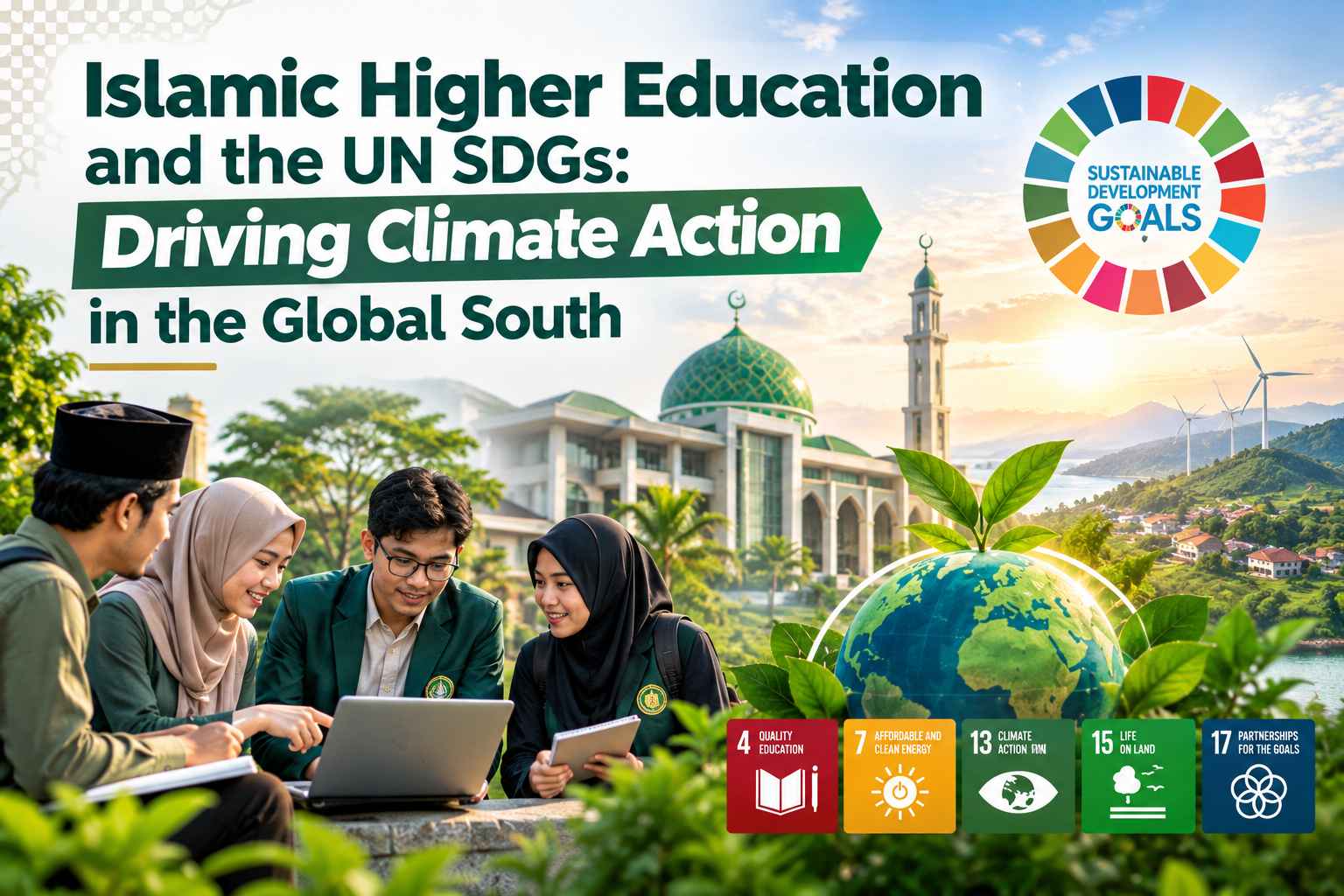
Climate change has become one of the most urgent challenges facing societies across the Global South. Rising temperatures, extreme weather, environmental degradation, and unequal access to resources continue to threaten vulnerable communities. While international agreements and government policies remain essential, universities have a critical role in developing sustainable solutions. In this context, Islamic higher education can contribute significantly to advancing the United Nations Sustainable Development Goals (SDGs), particularly climate action and environmental sustainability.
Islamic universities are not merely institutions for transmitting religious knowledge. They also have the potential to integrate ethical values, scientific research, and community engagement into their educational missions. The Islamic principle of khalifah, which emphasizes human responsibility for the Earth, provides a meaningful foundation for environmental awareness and sustainable development.
Through curricula that connect Islamic ethics with environmental science, universities can encourage students to understand climate change as both a scientific and moral challenge. Concepts such as amanah (responsibility), mizan (balance), and maslahah (public benefit) can support discussions about responsible consumption, ecological protection, and intergenerational justice.
However, climate action requires more than theoretical understanding. Islamic higher education institutions should strengthen research, innovation, and practical environmental programs. Renewable energy initiatives, sustainable campus management, waste reduction, and community-based conservation projects can transform universities into laboratories for sustainable development.
Their contribution is particularly relevant in the Global South, where many communities face climate-related vulnerabilities while possessing limited financial and technological resources. Universities can collaborate with local communities, governments, and international organizations to develop solutions adapted to regional needs. These initiatives may include climate-resilient agriculture, water conservation, and environmental education.
At the same time, Islamic higher education must avoid treating religious values as substitutes for scientific evidence. Effective climate action requires interdisciplinary cooperation, credible research, and policies informed by local realities.
Ultimately, Islamic universities can contribute to the UN SDGs by connecting knowledge, ethics, and social responsibility. Their mission should extend beyond producing graduates to cultivating environmentally conscious citizens and supporting communities facing ecological challenges.
By integrating Islamic ethical principles with scientific innovation and sustainable development, Islamic higher education can become an important partner in building a more resilient, equitable, and environmentally responsible future for the Global South.
#Prof. Dr. Afiful Ikhwan, M.Pd.I.