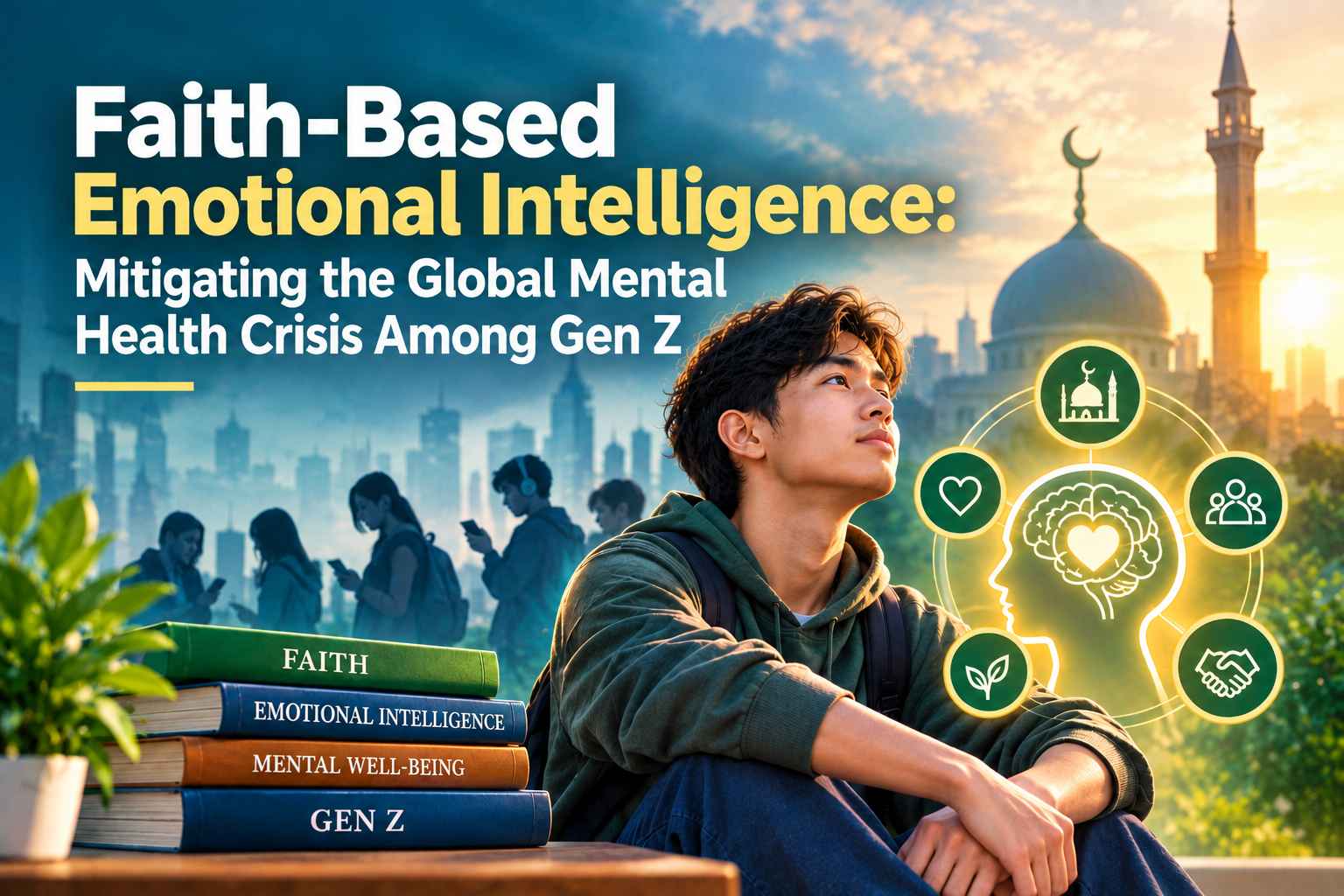
The world is witnessing a growing mental health crisis among Generation Z, a generation shaped by rapid technological advancement, social uncertainty, economic pressures, and unprecedented digital connectivity. While social media and digital platforms have created new opportunities for communication and self-expression, they have also intensified social comparison, anxiety, loneliness, and emotional exhaustion. Behind the appearance of constant connectivity, many young people struggle with questions of identity, purpose, belonging, and meaning.
The mental health challenges facing Generation Z require more than clinical interventions and technological solutions. Although professional mental health services remain essential, addressing the deeper dimensions of emotional well-being requires an integrated approach that considers psychological, social, spiritual, and ethical factors. In this context, faith-based emotional intelligence offers a meaningful framework for strengthening resilience and supporting the emotional well-being of young people.
Islamic ethical traditions, in particular, provide principles that can contribute to the development of emotional awareness, self-regulation, empathy, and spiritual purpose. When approached inclusively and combined with evidence-based mental health support, these values can help young people navigate the pressures of contemporary life.
Emotional Intelligence in an Age of Psychological Vulnerability
Emotional intelligence refers to the ability to recognize, understand, regulate, and respond constructively to emotions, both within oneself and in interactions with others. For Generation Z, developing these skills is particularly important in an environment characterized by rapid information exchange, online judgment, and continuous social comparison.
Digital platforms can expose young people to unrealistic standards of success, appearance, and lifestyle. The pressure to remain visible, productive, and socially accepted can contribute to emotional fatigue. Furthermore, global crises, political instability, climate concerns, and economic uncertainty may intensify feelings of insecurity about the future.
However, emotional intelligence should not be understood as an expectation that individuals must manage every difficulty independently. Emotional struggles can arise from structural conditions, interpersonal experiences, trauma, and mental health disorders. Therefore, emotional intelligence must be accompanied by supportive communities, accessible professional care, and social environments that respect human vulnerability.
Faith can contribute to this process by providing a framework through which individuals interpret emotions, develop ethical responses, and cultivate a sense of meaning.
Islamic Spirituality and Emotional Self-Regulation
Islamic teachings emphasize the importance of self-awareness, patience, compassion, and responsibility. These principles can support emotional development when translated into practical educational and psychological approaches.
The Qur’anic concept of *sabr* (patience and perseverance), for example, encourages individuals to respond to hardship with endurance and thoughtful action. Patience, however, should not be interpreted as passive acceptance of injustice or as a demand to remain silent about psychological suffering. Rather, it can be understood as the capacity to maintain constructive action while facing difficulties.
Similarly, muraqabah, the awareness of God’s presence, can encourage reflective self-awareness and ethical consideration. Through reflective practices, individuals may learn to recognize their emotional states, examine their reactions, and develop more intentional responses to stressful situations.
These spiritual practices should not be presented as substitutes for psychological treatment. Instead, they can complement professional support and contribute to a more comprehensive understanding of well-being.
For Generation Z, the integration of spiritual reflection with emotional education may create opportunities to explore questions that extend beyond achievement and social recognition: Who am I? What gives my life meaning? How should I respond to failure? How can I maintain compassion toward myself and others?
From Emotional Suppression to Emotional Awareness
One of the challenges in discussions about faith and mental health is the possibility of confusing spiritual strength with emotional suppression. Young people may sometimes feel pressured to appear strong, remain positive, or interpret emotional distress as a sign of weak faith.
Such interpretations can discourage individuals from seeking help. A constructive faith-based approach should instead recognize that experiencing sadness, fear, grief, and uncertainty is part of human life. Religious commitment does not eliminate emotional vulnerability, nor does seeking professional mental health support indicate a lack of faith.
Islamic teachings on compassion and human dignity provide a foundation for creating environments in which individuals can express their struggles without unnecessary stigma. Emotional intelligence, in this sense, involves not only managing emotions but also acknowledging them honestly.
Educational institutions, religious organizations, and families have an important role in fostering this culture. Teachers and religious leaders should be equipped to recognize signs of emotional distress, listen without judgment, and guide individuals toward appropriate professional assistance when necessary.
Faith Communities as Spaces of Emotional Support
Religious communities can serve as important sources of social connection and emotional support. For many young people, mosques, Islamic educational institutions, youth organizations, and community groups provide opportunities to build relationships and participate in meaningful activities.
Nevertheless, faith communities must ensure that support is inclusive and responsive to diverse experiences. Young people facing mental health challenges should not be reduced to their difficulties or judged solely through religious expectations.
A supportive faith community can develop programs that combine spiritual development with emotional education. These initiatives might include reflective discussions, peer-support activities, mentoring, mental health literacy, and collaboration with qualified psychologists or counselors.
The concept of rahmah (compassion) can serve as an ethical foundation for such programs. Compassion encourages communities to respond to suffering with care rather than stigma. It also reminds individuals that personal dignity should not depend on productivity, social status, or perceived success.
When young people experience acceptance and meaningful connection, they may be better positioned to seek support and develop healthier coping strategies.
Education as a Strategy for Building Emotional Resilience
Schools and universities should expand their understanding of education beyond academic achievement. Emotional and spiritual development can contribute to students’ ability to navigate uncertainty, manage interpersonal challenges, and make responsible decisions.
A faith-informed emotional intelligence curriculum could incorporate several interconnected dimensions:
- Emotional awareness: Helping students identify and communicate their emotions.
- Self-regulation: Developing constructive responses to stress, frustration, and conflict.
- Empathy: Encouraging sensitivity toward the experiences of others.
- Spiritual reflection: Exploring meaning, values, gratitude, and personal responsibility.
- Social connection: Strengthening supportive relationships and community participation.
- Help-seeking literacy: Teaching students when and how to access professional mental health services.
These elements should be adapted to the cultural and religious context of each educational institution while respecting individual beliefs and personal autonomy.
The objective is not to impose a single religious interpretation of mental health, but to explore how faith-based values can contribute to ethical, compassionate, and psychologically informed education.
Reimagining Mental Health Through Collaboration
Addressing the global mental health crisis among Generation Z requires collaboration across multiple sectors. Governments must strengthen mental health infrastructure, educational institutions should promote preventive support, families need accessible guidance, and religious organizations can contribute to community-based care.
Faith-based emotional intelligence can become part of this broader effort by connecting spiritual values with psychological knowledge and practical support. Its effectiveness, however, should be assessed through research rather than assumed solely on the basis of religious significance. Programs should be evaluated for their accessibility, safety, cultural sensitivity, and impact on participants’ well-being.
Mental health interventions must also recognize that not every young person shares the same religious beliefs. An inclusive approach allows faith-informed resources to coexist with secular and other culturally relevant frameworks.
Ultimately, the goal is to create environments in which young people can develop emotional competence without feeling pressured to conceal their struggles.
The mental health crisis affecting Generation Z presents a complex challenge that cannot be addressed through a single intervention. Professional psychological services, social policies, educational reform, and supportive communities all have important roles to play.
Within this broader framework, faith-based emotional intelligence offers an opportunity to connect emotional awareness with compassion, ethical responsibility, and a sense of purpose. Islamic values such as rahmah, sabr, and human dignity can contribute to this effort when interpreted thoughtfully and integrated with evidence-based mental health practices.
The future of mental health support depends not only on treating psychological distress but also on building communities where emotional vulnerability is acknowledged, human dignity is protected, and young people are empowered to seek help.
For Generation Z, faith can become a source of reflection, connection, and meaning not a barrier to professional support. By bringing together spirituality, emotional intelligence, and mental health education, society can work toward a more compassionate and resilient future.
#Dr. Syarifan Nurjan, MA.