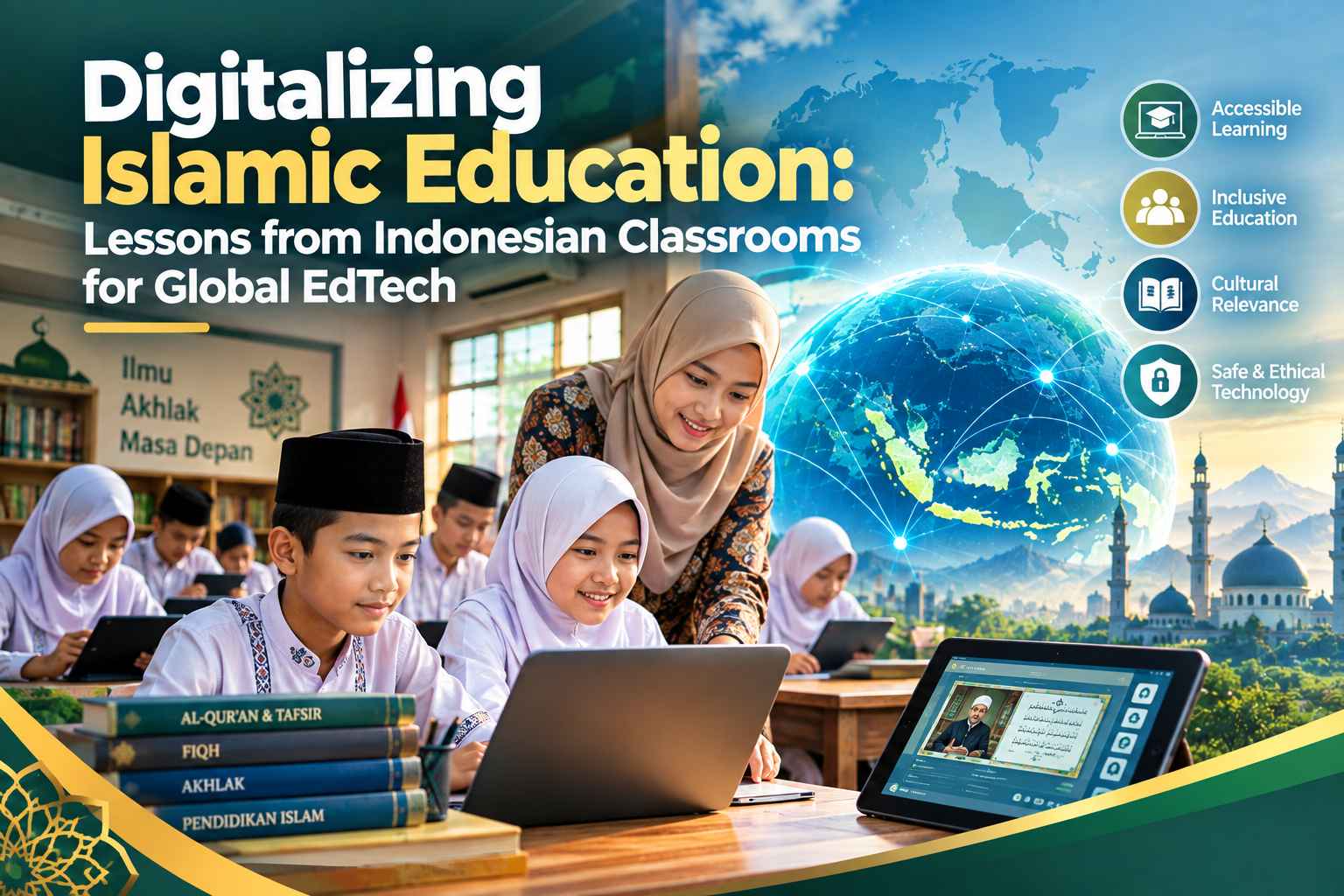
The rapid development of educational technology is transforming classrooms worldwide, creating new opportunities for learning, collaboration, and knowledge sharing. In Indonesia, a country with one of the world’s largest Muslim populations, digitalization is increasingly influencing Islamic education. From pesantren to universities, educational institutions are exploring how digital tools can strengthen teaching while preserving religious values and cultural identity.
Indonesia’s experience offers valuable lessons for the global education technology (EdTech) community. However, successful digital transformation requires more than providing devices and internet access. It demands thoughtful integration of technology, teacher preparation, and attention to local educational needs.
One important lesson from Indonesian classrooms is the significance of combining technological innovation with established educational traditions. Islamic education emphasizes not only academic knowledge but also character development, moral responsibility, and spiritual awareness. Digital platforms can support Quranic learning, religious discussions, interactive assessments, and access to scholarly resources. Nevertheless, technology should complement rather than replace the guidance of qualified teachers.
Another important consideration is digital inclusion. Indonesia’s geographical diversity creates differences in internet connectivity, technological infrastructure, and access to educational resources. Schools in urban areas may benefit from advanced digital platforms, while institutions in rural and remote regions may face significant limitations. Consequently, scalable EdTech models should include offline learning materials, mobile-friendly applications, and affordable technological solutions.
Teacher competence is equally essential. Educators need training in digital pedagogy, content development, and responsible technology use. Digitalization becomes more meaningful when teachers can adapt technology to students’ learning needs rather than simply transferring traditional lessons into online formats.
Furthermore, Indonesian Islamic educational institutions can contribute to global discussions about culturally responsive technology. Educational platforms should recognize linguistic diversity, local traditions, and different approaches to religious learning. International EdTech development can benefit from collaboration with educators and communities in the Global South.
However, digital transformation must also address data privacy, misinformation, unequal access, and the potential loss of meaningful human interaction. Educational innovation requires ethical safeguards and continuous evaluation.
Ultimately, Indonesia’s experience demonstrates that digitalizing Islamic education is not merely a technological project. It is an educational transformation that connects innovation with cultural identity, accessibility, and moral responsibility.
By learning from Indonesian classrooms, global EdTech initiatives can develop more inclusive, adaptable, and ethically grounded approaches to education in an increasingly digital world.
#Dr. Nuraini, M.Pd.